

How Community Sponsorship Can Build Brand Visibility in Healthcare Technology Management
In a niche B2B industry like healthcare technology management (HTM), building brand awareness means reaching out to the people who have their heart and soul into this industry and whose dreams shape how the healthcare domain grows. It is about consistently showing up in the right communities, in the right places, with conversations that spark the next generation to invest in this sector.
For DESCO, a diagnostic equipment service corporation, this became the focus of an almost year-long sponsorship of In The Room (ITR), a podcast produced by Women in Leadership Society (WIL).
DESCO used the partnership as an opportunity to build sustained visibility within the HTM community while supporting a broader mission of equity and representation in a traditionally male-dominated industry.
The results provide an interesting example of how community sponsorship, consistent content, and video-led social promotion can work together to build B2B brand visibility and create measurable digital engagement.
Why Equity Matters in HTM
Healthcare technology management has historically operated in a technical environment where leadership, engineering, and field service roles have often been perceived as male-dominated. Creating greater representation is therefore relevant to the profession’s long-term development.
Women entering HTM bring technical expertise, leadership experience, operational perspectives, and different professional networks. Their participation expands the range of experiences represented in conversations about technology management, workforce development, leadership, and the future of healthcare technology.
A stronger sense of inclusion can also influence who sees HTM as a profession in which they can build a career.
This inclusion matters because HTM organizations continue to depend on skilled people who can manage increasingly complex technology environments. A profession that is visible and welcoming to people with different backgrounds has a larger opportunity to attract and retain talent.
For BMETs and other frontline professionals, representation also matters at a practical level. The people shaping the profession influence which career paths are visible, what leadership looks like, which skills are valued, and how the industry responds to changes in healthcare technology.
Women leaders need a voice in those conversations because they are part of the workforce experiencing those changes.
What a Diverse HTM Ecosystem Brings to Companies
For DESCO, supporting diversity and representation is connected to its identity as a company owned and led by a woman. The company chose to align its sponsorship with WIL’s mission of promoting equity in industries such as HTM.
There is also a business dimension to building a diverse ecosystem.
Companies operating in healthcare technology serve hospitals, healthcare systems, clinical engineering departments, independent service organizations, manufacturers, research facilities, university spaces, dental facilities, and other organizations with varied needs and perspectives. A workforce and professional network that reflects that diversity can provide broader insight into customers and the environments in which healthcare technology is used.
Diverse professional communities can also create stronger networks for mentorship, collaboration, recruiting, knowledge sharing, and leadership development.
For a company such as DESCO, participation in those communities strengthens relationships well beyond any ad spend or marketing communication. It creates opportunities to understand the people who influence the industry and to contribute to the conversations that matter to them.
When women and other underrepresented professionals are visible as technicians, engineers, educators, executives, entrepreneurs, and industry leaders, they provide additional examples of what a career in HTM can look like.
What the DESCO and In The Room Case Study Shows
The sponsorship provides measurable evidence of what can happen when a company invests consistently in a professional community.
During the period analyzed, audience reach grew from a baseline of fewer than 200 members to nearly 3,000, while engagement reached more than 30% during the May pre-launch period. Impressions also increased substantially around the promotional campaign and episode launches.
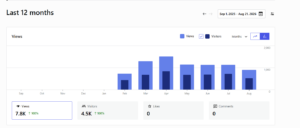
DESCO website visits continue to grow with consistent branding and sponsorship content
DESCO’s website experienced 100% year-over-year growth in both views and visitors during the broader period, although the case study appropriately notes that this growth cannot be attributed solely to the sponsorship because DESCO was also conducting online and offline customer outreach.
There was, however, a particularly clear example of community activity translating into interest in DESCO.
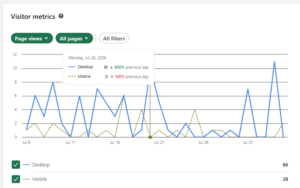
Women In Leadership website and LinkedIn have started driving significant traffic to DESCO’s LinkedIn Page
On July 20, WIL published a pre-launch video for the second episode. DESCO did not publish on LinkedIn that day, yet its website recorded 10 new visitors from HTM organizations—a 900% increase over the previous day. The WIL video generated 422 impressions and 336 views.
That example demonstrates the value of access to a relevant community. DESCO was able to reach people through an organization and content platform that had its own audience and credibility.
Community Investment Creates Value Beyond Marketing
Companies in HTM operate within an interconnected professional ecosystem. Their customers, employees, suppliers, partners, educators, and future employees are part of that ecosystem.
Investing in its health can create value for the company while strengthening the profession around it.
For DESCO, supporting WIL created an opportunity to associate its brand with women’s leadership and equity while building visibility among a relevant professional audience. The case study found that reach, engagement, and impressions increased alongside the sponsorship activity, and identified a direct example of community content driving visitors to DESCO’s website.
For the HTM community, partnerships of this kind can help elevate voices that deserve greater representation in industry conversations.
For BMETs and emerging professionals, visible leadership creates additional examples of how people can contribute to the profession.
For women leaders, platforms such as In The Room provide an opportunity to share experiences and influence how the next generation understands leadership in healthcare technology management.
And for companies, a more diverse and connected ecosystem can create stronger relationships, broader perspectives, and a deeper pool of talent and expertise.
Building the HTM Community We Want to Work In
The future of healthcare technology management will be shaped by technological change, but also by the people who lead, maintain, teach, and support that technology.
Building an inclusive professional ecosystem is therefore an industry investment.
Organizations have an opportunity to contribute through sponsorships, mentorship, leadership development, education, conference participation, community partnerships, and by creating platforms where different voices can be heard.
The DESCO and In The Room experience illustrates how one company approached that investment. The longer-term value is the community itself: more people participating, more perspectives represented, more opportunities for leadership, and a stronger professional ecosystem for the people responsible for healthcare technology.
That is ultimately why equity matters in HTM. A profession becomes stronger when more of its people have the opportunity to contribute to its direction.
For a detailed case study document, reach out through our Contact Us page!
Want to Learn More?
If you’re looking for expertise on what medical devices to purchase, if you’re having difficulty aligning with your team, we can offer specific technical help, and professional communication training to you and your team because of the expertise we have on hand both technically and in terms of leadership and communication.
Our new headquarters in Hadley, Massachusetts, will offer hands-on medical equipment repair training, as well as a classroom space for professional communication learning. Currently, we offer skills training at customer or other off sites. You can also visit us in our Miami, FL, North Carolina, and Birmingham, Alabama regions.

Recent Comments